

I like games.
But I don’t want to code.
There may be more than one way to be part of something you love.
The conversation
Concept example. This is a fictional conversation, not a real student story, product transcript, or measured result.
1Liking games doesn’t mean wanting to be a programmer
Student
I really like games. I’ve thought about doing something with them someday, but I don’t like coding.
Seven
Is there anything in a game you play that makes you think, “I’d change that”?
Student
Some games knock people out too early. My friend gets eliminated right away and just has to sit there watching.
Seven
Is the problem that your friend lost, or that there’s nothing left for them to do?
Student
Nothing left to do. Losing is fine. Waiting for everyone else to finish is boring.
2Someone’s job is to think about that
Seven
What would you change?
Student
Let eliminated players help their teammates somehow. But not all the time. That wouldn’t be fair either.
Seven
That’s an interesting design problem: how do you keep everyone involved without making the game unfair?
Student
But someone still has to code all that, right?
Seven
To put it into a video game, yes, someone has to build it. But deciding how it should work—and why that would make it more fun—is also a job. Gameplay designers work on questions like these, alongside programmers, artists, and other teammates.
Student
I thought making games was mostly coding and drawing.
Seven
People also design the rules, the levels, and what it’s like to play. But enjoying games and enjoying designing them aren’t necessarily the same thing. Want to try a little of the second one?
3Change one rule. You don’t have to build a whole game.
Student
How? I can’t change the game itself.
Seven
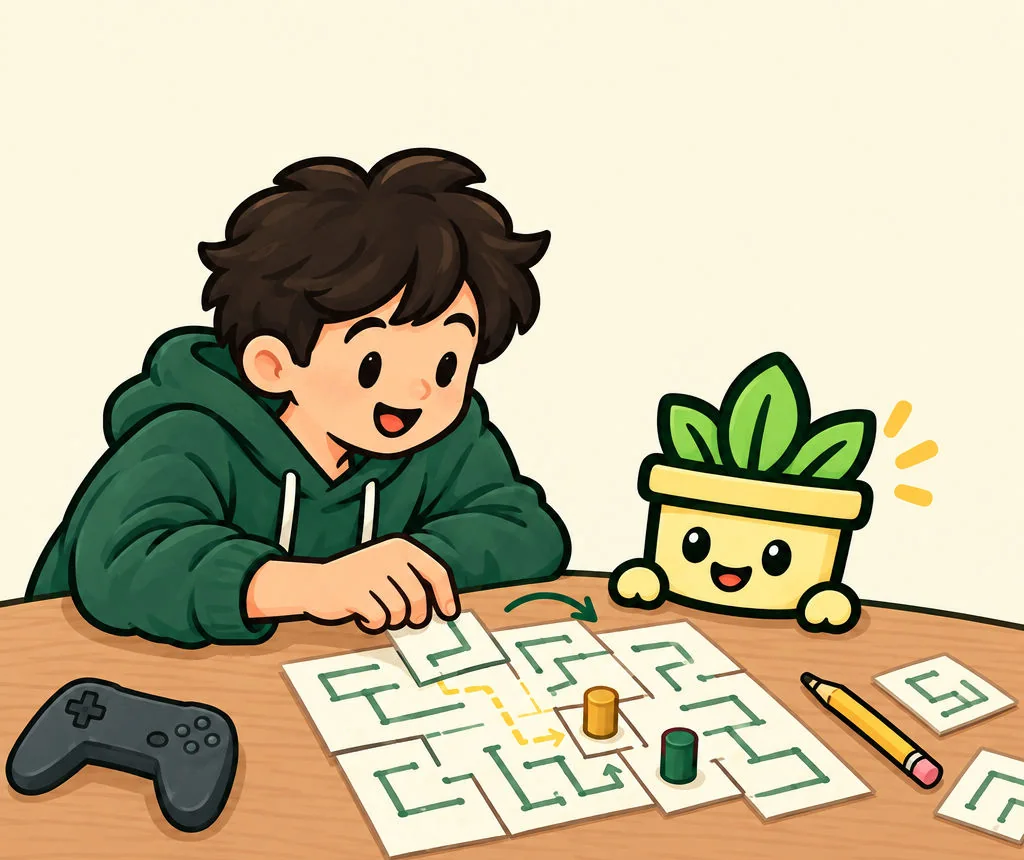
You don’t need to change any software. Pick a card game or a simple game you and your friends already know. Add one rule that gives eliminated players something to do, and try a round.
Student
Like letting them give a teammate one hint after they’re out?
Seven
That could be your first version. You think it’ll help people stay involved. Let’s see whether it does—and whether the other players still think it’s fair.
Student
What if it just makes the game messier?
Seven
Then we’ve found something to change. Designing isn’t just coming up with an idea. It’s seeing what happens when other people play it.
Student
I’d actually like to try that.
Seven
Tell me which game you have in mind and how it works now. I’ll help you make the new rule clear. After you try it with your friends, we can look at what happened together.


What the student is exploring
The student assumed that working in games meant becoming a programmer. Seven starts with a problem the student already cares about, then introduces gameplay design as a direction they hadn’t considered.
This is not a career assessment or a conclusion that the student should become a game designer. It’s a chance to find out whether they enjoy designing an experience, listening to feedback, and making changes—not just playing the finished game.
Seven uses questions to understand the student’s thinking, then supplies information the student doesn’t yet have. The goal is not to keep asking until the student guesses a predetermined career.
Something small to try
Change one rule so eliminated players can stay involved.
Choose a familiar card game or simple game whose rules you can change together. Write down your new rule, try it with friends, and notice:
- Did eliminated players have something worthwhile to do?
- Did the other players still think the game was fair?
- Did the change create a new problem?
- Your part
- Choose the game, suggest a rule, and try it with friends.
- Seven’s part
- Help explain the rule clearly, consider possible problems, and make sense of the feedback afterward.
- What you might walk away with
- “I didn’t know this was a job. And I can try a little of it now to see whether I like it.”
Bring something you’re into. Let’s see what else is in it.
Get startedBefore you start
- Free to start.
- A Seven account is free. No card needed.
- A few short steps.
- At the end, students add a parent’s name, email and phone; parents add their child’s details.
- Students start with a few questions.
- Answer a few questions about yourself, and Seven suggests your first next steps. Parents start in the parent portal instead.
- Made by 7EDU.
- Seven comes from the 7EDU team.